Albert Fountain
Look up another file, or rank this person against the opposite corpus.
Sex
Male
Age
57
Race
White / Caucasian
Height / weight
—
Appearance
Hair
—
Eyes
—
Clothing & jewelry
None listed
Circumstances
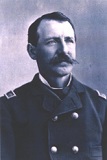
Colonel Albert Jennings Fountain, born in New York, was a leading figure in the Republican Party in New Mexico, having served a term in the state legislature. He was also a lawyer in New Mexico and at one time defended Billy the Kid. At the time of his disappearance, he was the chief investigator and prosecutor for the newly formed Southeastern New Mexico Stock Growers' Association and he was working to put an end to cattle rustling. Fountain, accompanied by his eight-year-old son Henry, was in Lincoln, New Mexico, to present a case at the Lincoln County Courthouse. During the proceedings, Fountain received an anonymous note warning 'If you drop this we will be your friends. If you go on with it you will never reach home alive. ' Fountain kept with the case and secured 32 indictments. On January 30, Albert Fountain and Henry began the 140-mile, three to four day journey home, traveling by a four-wheel covered buckboard wagon led by a team of two horses. They traveled through the Sacramento Mountains stopping for the night at the Mescalero village where they acquired a pinto pony from a friend. On January 31, while traveling to La Luz to spend the night, Fountain, noticed two riders, sometimes ahead and sometimes behind, throughout the day and began to get uneasy. On February 1, while enroute for Mesilla via the Tularosa Basin and White Sands, he met with a stage coach whose driver mentioned three riders in the distance. After resting, he met another stage coach and noticed the same three riders in the distance. Because Henry was sick, he pressed on rather than take a break for the night. This was the last time anyone saw or heard from Albert or Henry. Two search parties, one of them led by Fountain's son, helped by two Mescalero Apache scouts, began piecing together the evidence. They found where a man had knelt and fired from behind a growth of shrubs, leaving shell casings on the ground. They discovered the site where two men had tended three horses. They followed wagon tracks and discovered a pool of blood. One man discovered a blood-soaked handkerchief with a nickel and a dime tied in its corner. They followed the wagon tracks of the buckboard and the hoof tracks of six horses east for some 12 miles, into sand dunes west of a small and isolated mountain range called the Jarillas. There, they discovered Albert's carriage, which had been plundered and abandoned. Search parties continued to look for the bodies and a reward offer was made by the New Mexico governor for the capture of the killers. Eventually, Oliver Lee, William McNew, and James Gilliand were arrested for the murder of Henry but charges against McNew were dismissed and Lee and Gilliand were acquitted. On October 20, 1900, the Albuquerque Daily Citizen ran an article reporting that charred remains of a man and boy had been found in a canyon in the Sacramento Mountains. Sheriff Pat Garrett said it was impossible to identify the remains as Albert and Henry. Albert's older son, J. J. Fountain, stated that items were found with the remains that would not have belonged to his father but didn't rule out that the killers could have put the items there to throw off the investigation. The son later seemed resigned to the idea of the bodies belonging to his father and brother since no other disappearances involving a man and boy were known in the area. A memorial to both are in the Masonic Cemetery in Las Cruces. A 2013 film, Among the Dust of Thieves, portrays the disappearance of Albert Fountain.
Media
photo
Possible matches
Scroll here to rank this file against the opposite corpus, or start manually.